

Sit-to-Stand Exercise

The sit-to-stand is one of the most useful exercises around, mostly because you already do it all day without thinking. Every time you get up from a chair, the couch, the toilet, the car, or the side of the bed, that is a sit-to-stand. Training it on purpose builds the leg strength, hip power, and balance that keep you steady and independent.
Why the Sit-to-Stand Matters
This one movement works your thighs, glutes, and hips, the muscles you rely on to walk, climb stairs, and steady yourself if you trip. How well someone can stand up from a chair is one of the better signs of how independent they'll stay as they age, which is why physiotherapists use it both to build strength and to track progress. It is particularly helpful when you are rebuilding strength after surgery, recovering from a knee replacement or hip replacement, managing osteoarthritis, or simply staying mobile through the changes we cover in our guide on why mobility matters as we age.
How to Do the Sit-to-Stand
Use a sturdy chair without armrests, placed against a wall so it can't slide. Keep something solid within reach, like a counter or the back of another chair, in case you want support.
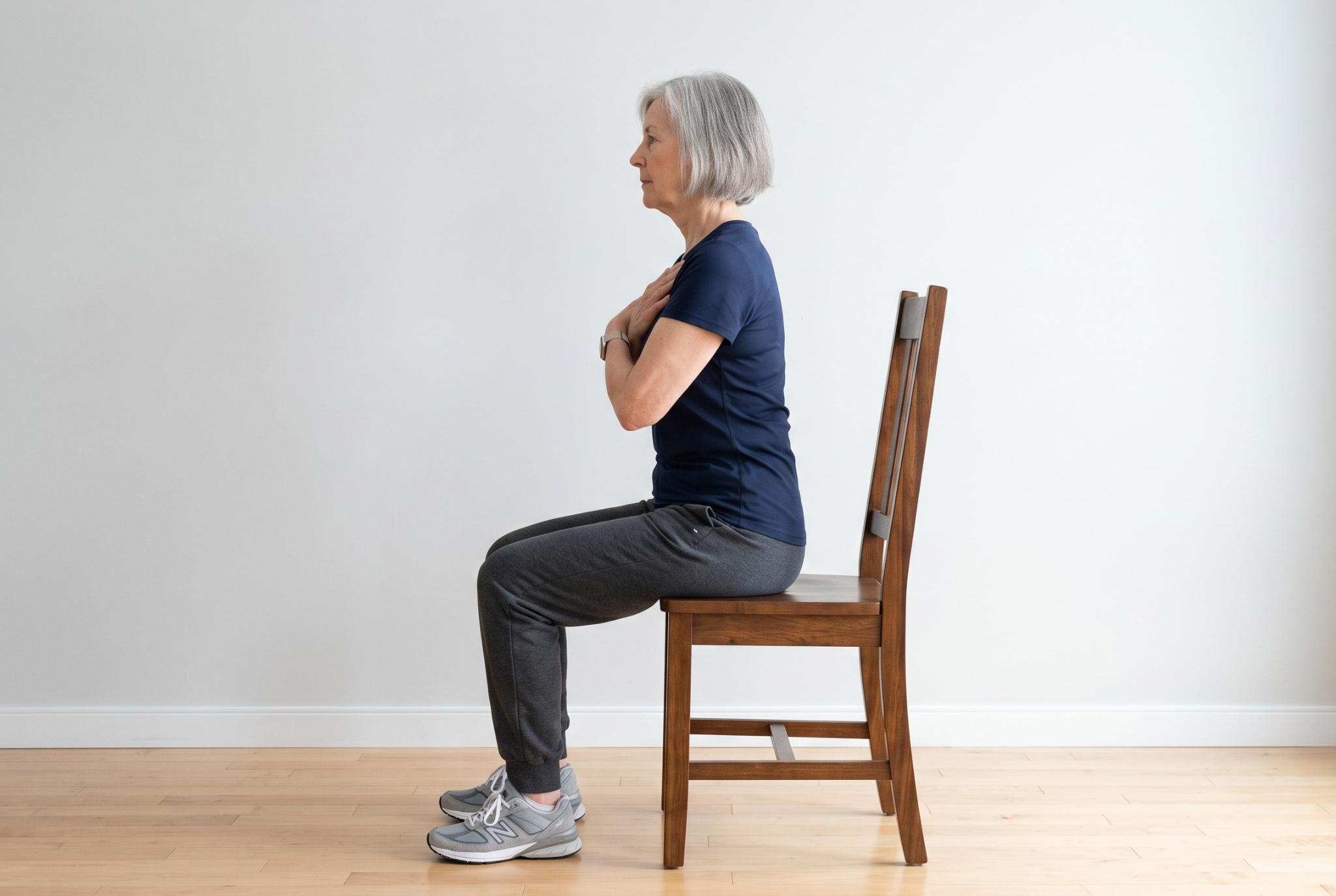
1. Start position. Sit near the front of the chair with your feet flat and about hip-width apart, pulled back so they sit just under your knees. Cross your arms over your chest, or reach them out in front of you for balance.
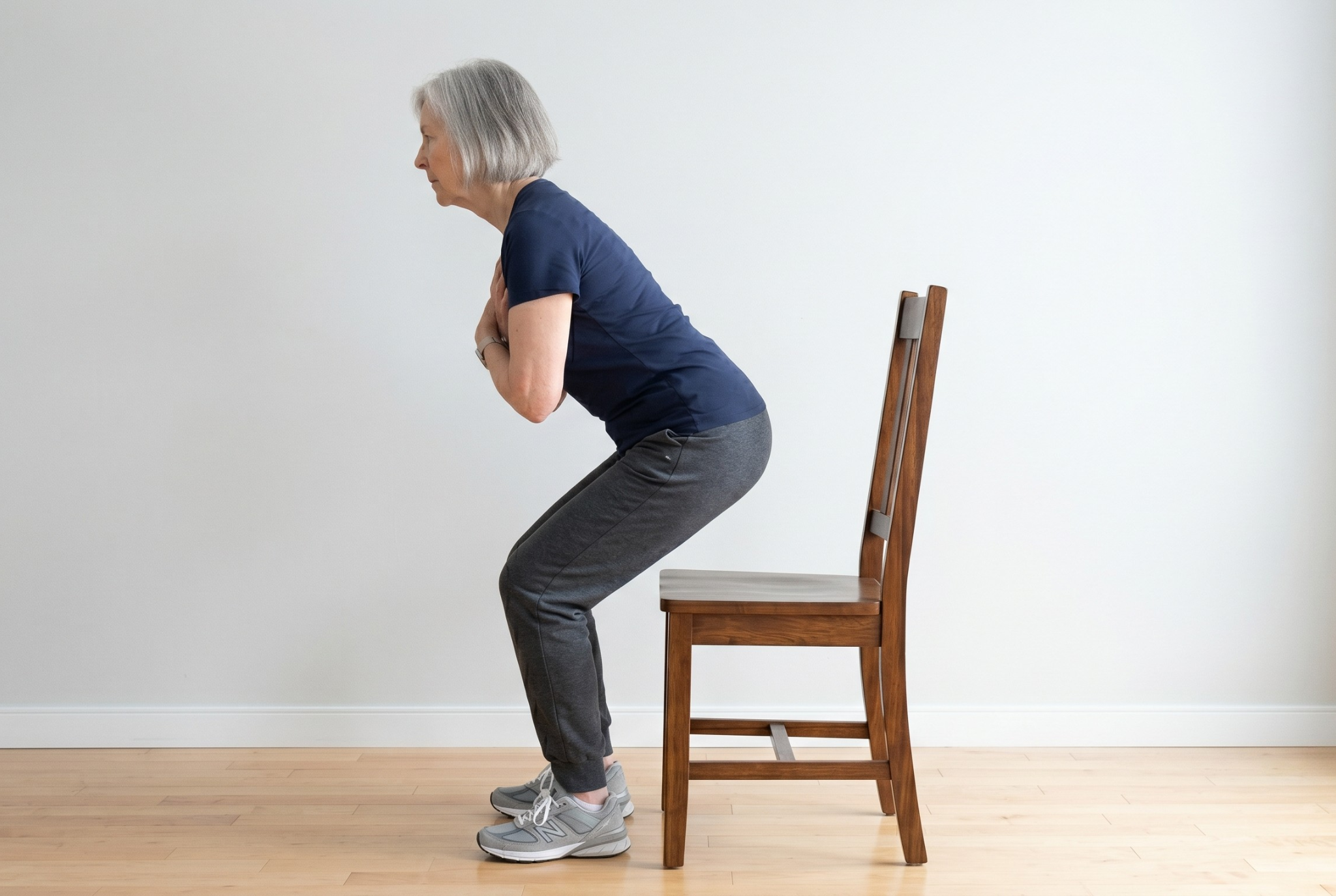
2. Lean and rise. Tip forward from your hips until your nose is over your toes. That "nose over toes" cue is what makes standing up feel easier and safer. Press down through your heels and start to rise, keeping your weight in your heels rather than letting it roll to your toes.
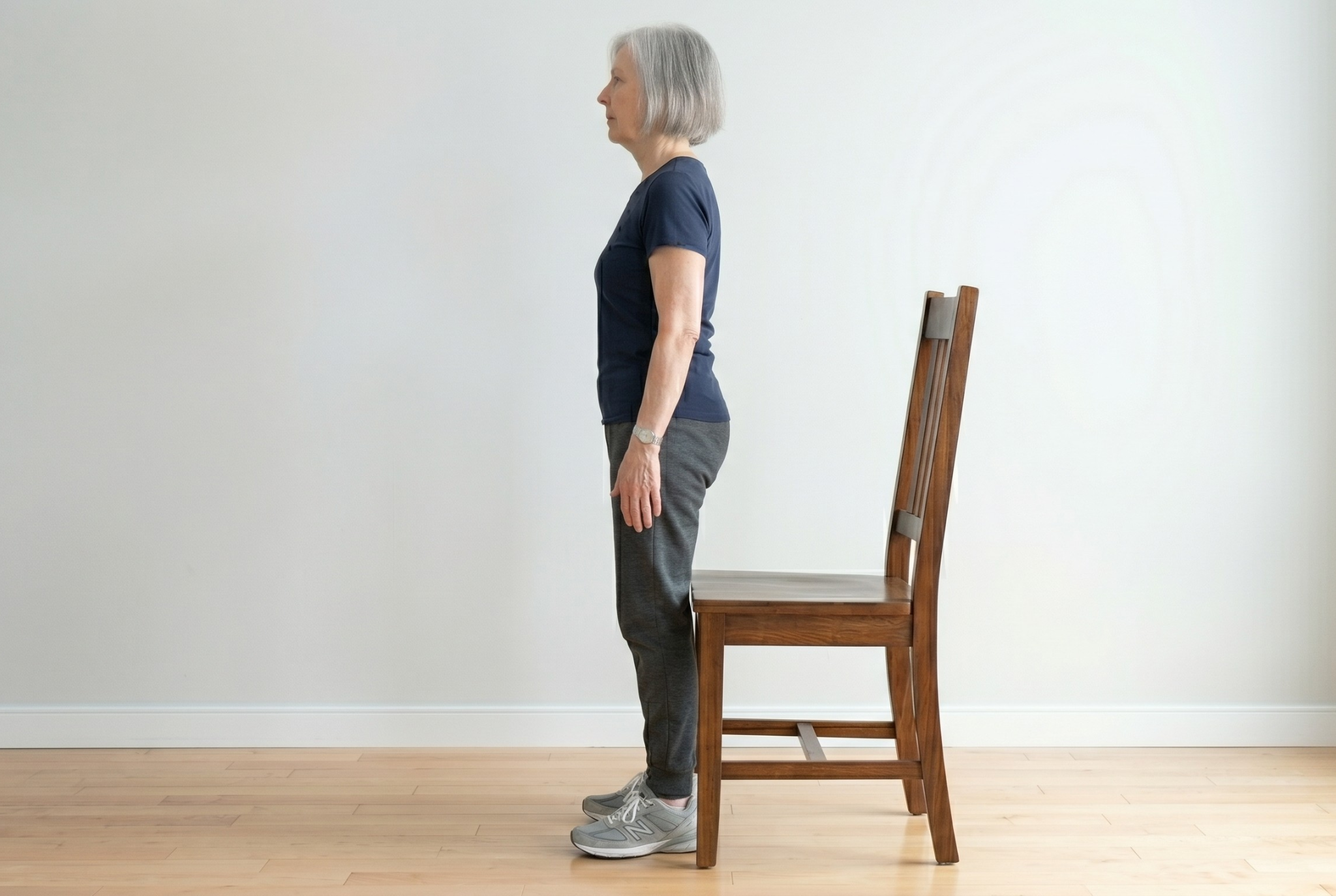
3. Stand tall. Come all the way up, squeeze your glutes, and stand fully upright. Take a second to find your balance, then lower yourself back down slowly and with control instead of dropping into the seat.
Sets and Repetitions
A good starting point is 2 to 3 sets of 8 to 10, once a day, but your physiotherapist will set the right number for you. Slow and controlled beats fast every time. It builds more strength and it is safer. Once 10 feels easy and your form still looks clean, you are ready to make it harder.
Common Mistakes to Avoid
Keep an eye out for coming up onto your toes instead of driving through your heels, knees caving inward, using a bounce or a swing to get up rather than your muscles, and flopping back down instead of lowering with control. If you find yourself hauling on a walker or armrest to get up, use one of the easier versions below rather than building that habit.
Making It Easier or Harder
To make it easier: start from a higher seat or add a firm cushion so you have less distance to travel, or rest your hands lightly on something stable in front of you.
To make it harder: use a lower seat, hold a light weight against your chest, take three or four seconds to lower down, or work toward a full standing squat. Pairing it with the straight leg raise and lunge walking rounds out a solid lower-body routine.
Since the sit-to-stand tests balance as much as strength, it is a go-to exercise for preventing falls. If staying steady on your feet is a worry, our article on fall prevention adds more, and a physiotherapist can make sure you are doing it safely.
Therapia provides in-home physiotherapy across the GTA, including Toronto, Mississauga, Scarborough, and Vaughan. For a program built around your own goals, book an appointment online or call 416-526-6933.
Commonly Recommended For: Physiotherapists often include the sit-to-stand in plans for Knee Replacement, Hip Replacement, Osteoarthritis, Parkinson's Disease, and Stroke. If you are managing one of these, check with your physiotherapist that this exercise is right for you.
Our Pricing
Our Pricing
Our services are reimburseable through most private insurance providers including Cowan, Great-West Life, Desjardins, iA Financial Group, and Standard Life.
Physiotherapy
/45 min session
Licensed Physiotherapist
Personalized treatment plan
Direct billing available
Virtual Physiotherapy
/60 min session
Licensed Physiotherapist
Personalized treatment plan
Direct billing available
Massage Therapy
/60 min session
Registered Massage Therapist
Enhances physical well-being
Direct billing available
Psychotherapy
/60 min session
Licensed Psychotherapist
Promotes long-term wellness
Direct billing available