

Single Leg Standing Balance

Standing on one leg sounds almost too simple to matter, but it's one of the most valuable things you can practise for staying steady on your feet. Balance is a skill, and like any skill it fades when we stop using it. Training it directly builds the strength, coordination, and confidence that keep you upright and independent, and help you catch yourself if you trip.
Why Single Leg Balance Matters
Every step you take is really a brief moment of standing on one leg, so balance is woven into almost everything you do. As we get older, the systems that keep us steady, in the inner ear, the eyes, and the muscles and joints, naturally become less sharp, which raises the risk of falls and the serious injuries that can follow, like hip fractures. Single leg balance work is a cornerstone of fall prevention, and it's especially useful for people recovering from a stroke, managing Parkinson's disease or other neurological conditions, rebuilding after a knee replacement or hip replacement, or restoring stability after an ankle injury. Staying steady on your feet ties directly into our article on why mobility matters as we age.
How to Do Single Leg Standing Balance
Safety comes first with any balance exercise. Always practise near a solid surface you can grab if you need to.
Supported version. Stand tall behind a sturdy kitchen counter or the back of a heavy chair, with your feet hip-width apart. Rest your fingertips lightly on the surface for support. Shift your weight onto one leg and slowly lift the other foot a few inches off the floor, keeping a slight bend in the standing knee. Hold steady, using your fingertips only as much as you need, then lower and switch sides.
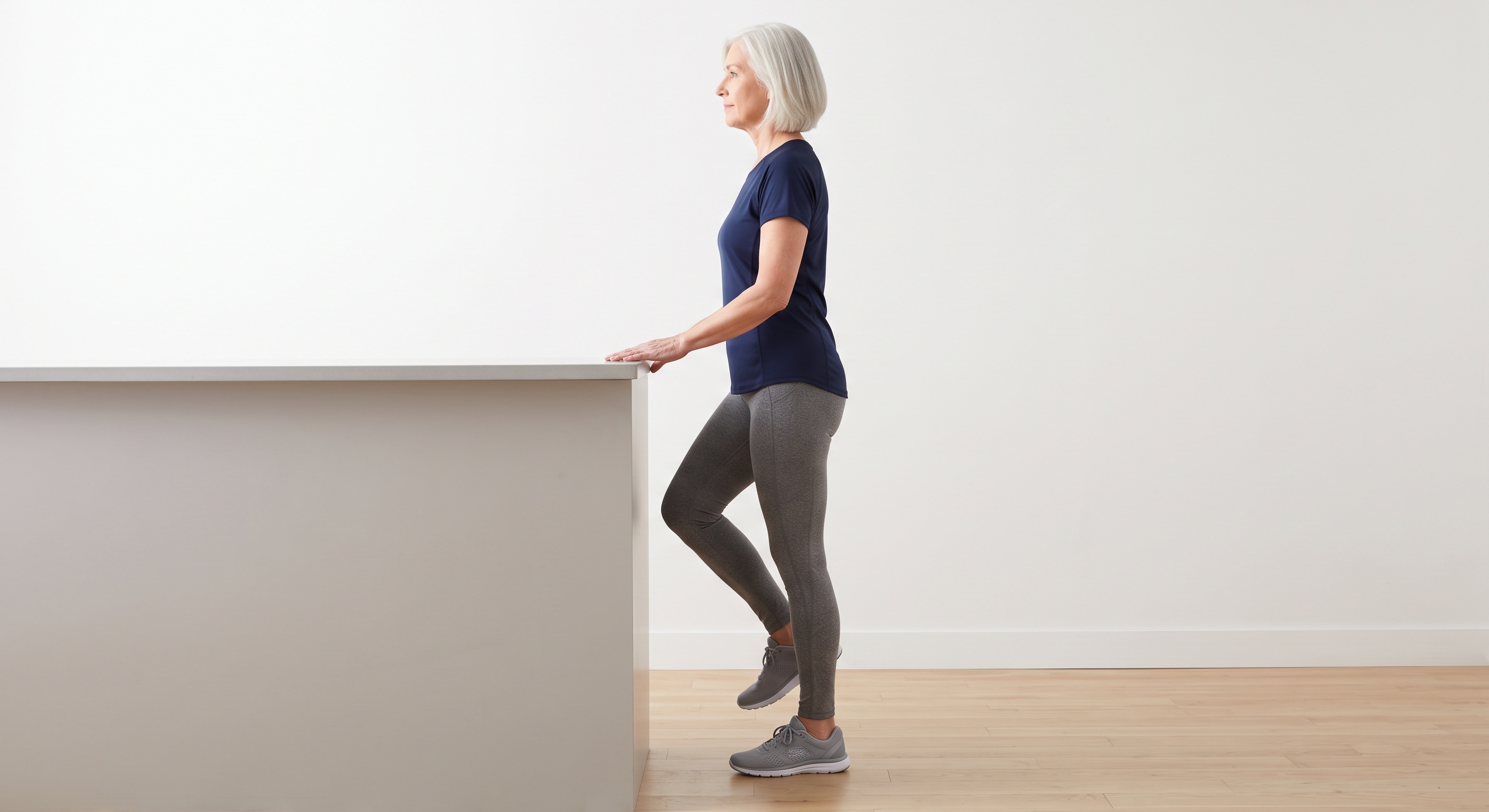
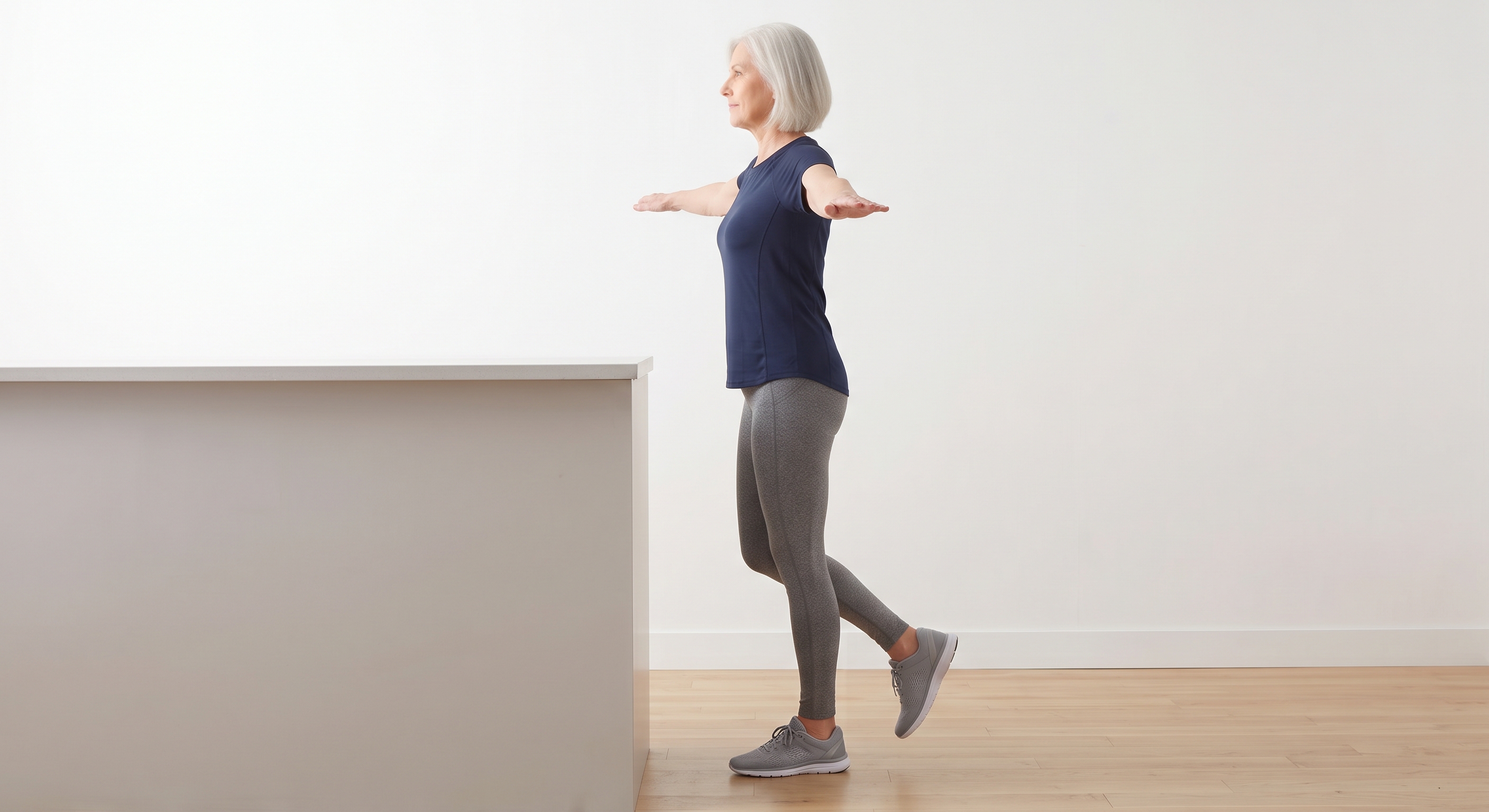
Progression. As your balance improves, reduce your support until you're using just one fingertip, then try letting go entirely, keeping your hands hovering near the counter and your arms slightly out to help you balance. Only progress to hands-free once you feel steady and safe, and always keep the support within arm's reach.
How Long to Hold
Aim to hold the balance for 10 to 30 seconds on each leg, and repeat 2 to 3 times per side. Practising once or twice a day is enough to build noticeable improvement over a few weeks. Focus on a fixed point in front of you at eye level, which helps steady your balance, and keep breathing normally rather than holding your breath.
Common Mistakes to Avoid
Watch for gripping the counter tightly instead of using light fingertip support, since leaning on your arms takes the work away from your legs. Avoid holding your breath, looking down at your feet, or letting the standing knee lock out straight. And don't rush to the hands-free version before you're ready, progressing too quickly is how balance practice turns into a fall.
Making It Easier or Harder
To make it easier: keep both hands resting on the counter, and lift the foot only a small amount off the floor.
To make it harder: reduce your hand support, hold the position longer, turn your head slowly from side to side while balancing, or, once you're confident and safe, try it with your eyes closed while staying close to your support. Pairing balance work with leg strengthening from the sit-to-stand, gait practice with lunge walking, and hip stability from the clam shell exercise builds a well-rounded routine for staying steady.
Balance training is one of the most effective ways to reduce fall risk, and our article on fall prevention covers the bigger picture. If you're recovering from a stroke, gentle balance work is often part of the plan we describe in in-home stroke rehabilitation. A physiotherapist can make sure you're practising safely and at the right level for you.
Therapia provides in-home physiotherapy across the GTA, including Toronto, Mississauga, Oakville, and Vaughan. Book online or call 416-526-6933.
Commonly Recommended For: Physiotherapists often include single leg standing balance in treatment plans for Stroke, Parkinson's Disease, Knee Replacement, Hip Replacement, and Sprains, Strains, and Tears. If you're managing one of these conditions, speak with your physiotherapist about whether this exercise is appropriate for you.
Our Pricing
Our Pricing
Our services are reimburseable through most private insurance providers including Cowan, Great-West Life, Desjardins, iA Financial Group, and Standard Life.
Physiotherapy
/45 min session
Licensed Physiotherapist
Personalized treatment plan
Direct billing available
Virtual Physiotherapy
/60 min session
Licensed Physiotherapist
Personalized treatment plan
Direct billing available
Massage Therapy
/60 min session
Registered Massage Therapist
Enhances physical well-being
Direct billing available
Psychotherapy
/60 min session
Licensed Psychotherapist
Promotes long-term wellness
Direct billing available